
Balanced Sustainability
March 2, 2025
Category: News / Commentary, Resources,
By Tim Smith, MAA President
Published in the February 28, 2025 Weekly Update
The definition of sustainability has become increasingly divided, with various agencies and individuals adopting their own interpretations based on specific perspectives and agendas, often without considering other viewpoints. At its core, sustainability refers to the ability to maintain or support a process continuously over time. In business policy contexts, it primarily aims to prevent the depletion of natural resources, ensuring their availability for the long term. However, definitions of sustainability have evolved over time, shaped by different disciplines, contexts, and periods. This variability has led many groups to adopt definitions that are narrowly focused on their specific interests.
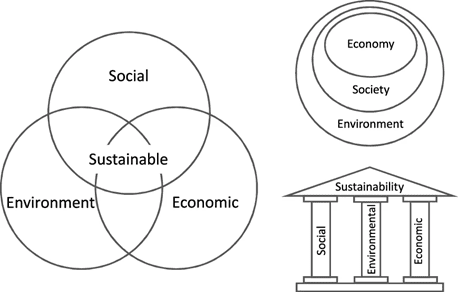
Sustainability visualized simply encompasses three main components, often referred to as the “pillars” of sustainability:
- environmental,
- economic, and
- social.
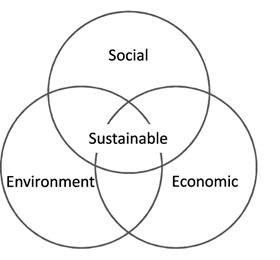
These three pillars interact and overlap, as shown in Venn diagram, highlighting the interplay of different perspectives. To achieve true sustainability and societal success, all three elements must be balanced—regardless of individual opinions, agendas, or perspectives.
In the context of asphalt pavement and Maryland transportation infrastructure, sustainability has become more prominent through the formation of our Association’s committee and our collective efforts toward achieving net-zero carbon emissions. Our legislators, executive branch leaders, and environmental advocates have pushed a great deal of legislation in the past years focused on one or two sustainability pillars. However, achieving true sustainability requires acknowledging and balancing all three pillars, rather than prioritizing one at the expense of the others. This doesn’t necessarily mean giving equal weight to each pillar, but it does mean recognizing and respecting the importance of each.
For example, in Maryland, we’ve witnessed a strong push for increased investment in perceived environmentally focused transportation initiatives – like transit. However, to fully balance sustainability’s three pillars we must approach our transportation investments differently than our current one. The cost of new rail transit is significantly higher than that of roadways, with rail costing $100-$500 million per mile (Analysis 3.0), compared to just $1-$5 million per road mile (MD data). If we focus solely on one or two pillars while neglecting the others, we create an unsustainable system.
In Maryland’s case, the transportation budget is being squeezed, with resources being shifted from road maintenance to fund transit efforts. By re-allocating funds from roadways to rail transit without increasing the total funding pie, we’re leaving a significant gap in road maintenance, which further strains an already underfunded system. In essence, we’re diverting resources that are crucial for the upkeep of our roads to support a much more expensive initiative, which ultimately undermines both goals.
This situation is like a growing family living in a small house. Instead of seeking additional resources to fund necessary improvements, such as saving for kid’s college fund or expanding the home, we decide to take money meant for essentials like food and redirect it into savings for future goals. This doesn’t solve the problem—it only creates new issues, jeopardizing the present and creating an uncertain future that we may never reach now.
Sustainability requires balance, and Maryland’s current approach is imbalanced. To move forward in a way that promotes long-term success, we must find a way to balance the environmental, economic, and social pillars, acknowledging that all perspectives are important. In the words of Mr. Miyagi, “Balance is key.” Without it, we risk undermining our sustainability efforts and creating a future that fails to meet our needs.