
FY 2026-2031 CTP: Tim’s Take
September 25, 2025
Category: Transportation Facts, News / Commentary, Resources,
By Tim Smith, MAA President
Published in the September 5, 2025 Weekly Update
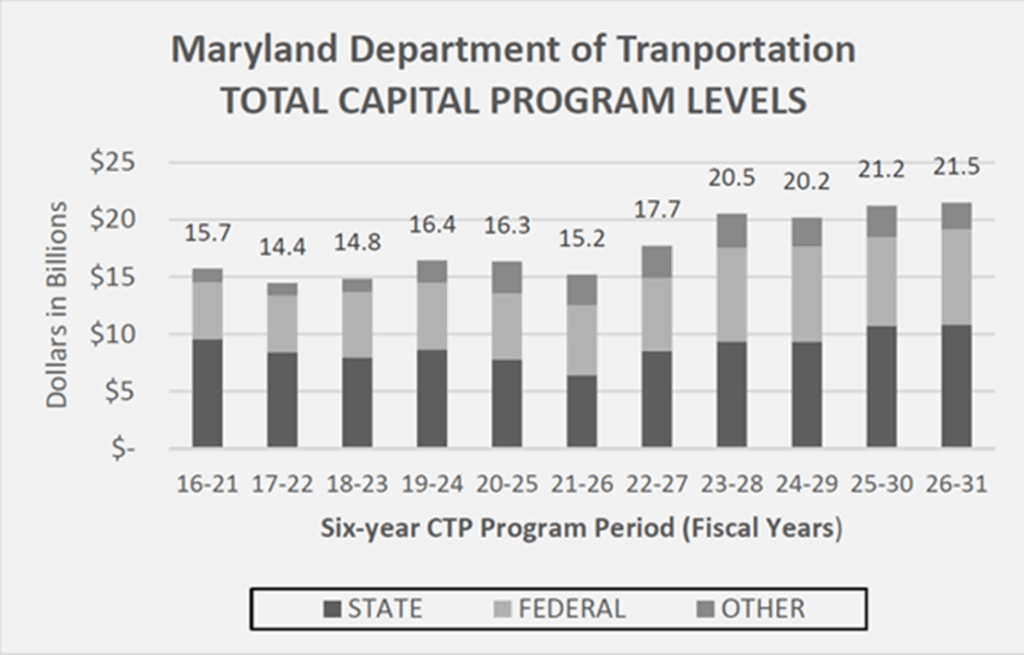
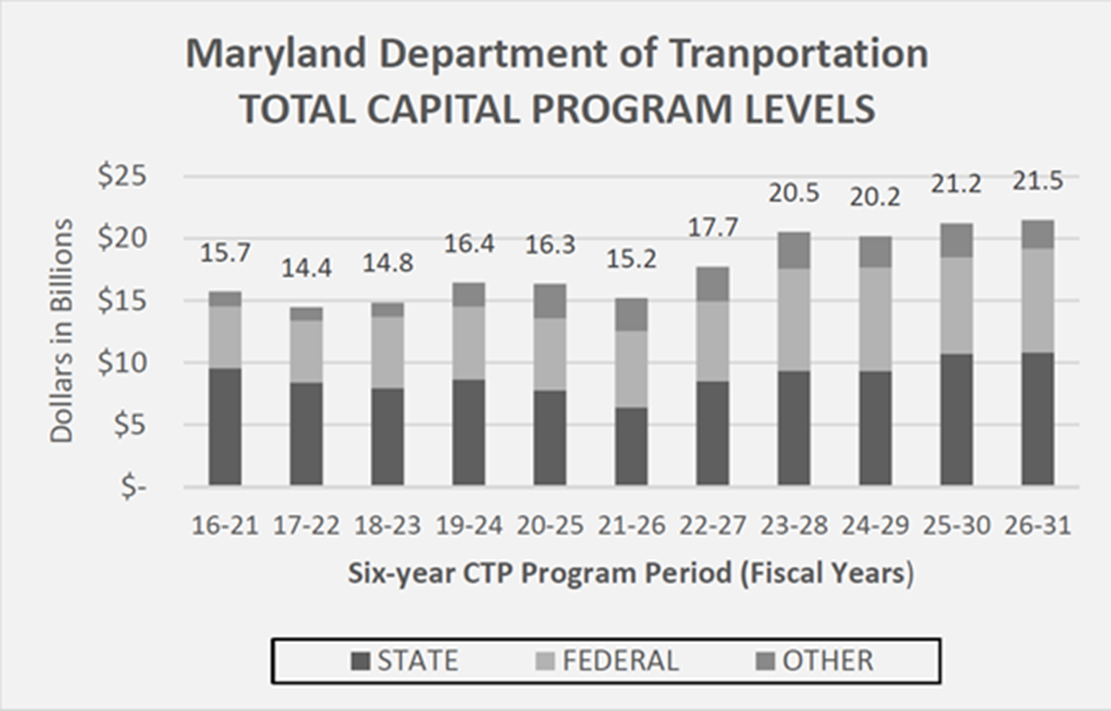
The Maryland Department of Transportation’s (MDOT) FY 2026–2031 Consolidated Transportation Program (CTP) represents the largest transportation budget in more than a decade at $21.5B – based on records going back to FY 1992, likely the largest in state history. For perspective, the entire six-year CTP budget in 1992 was $3.8B.
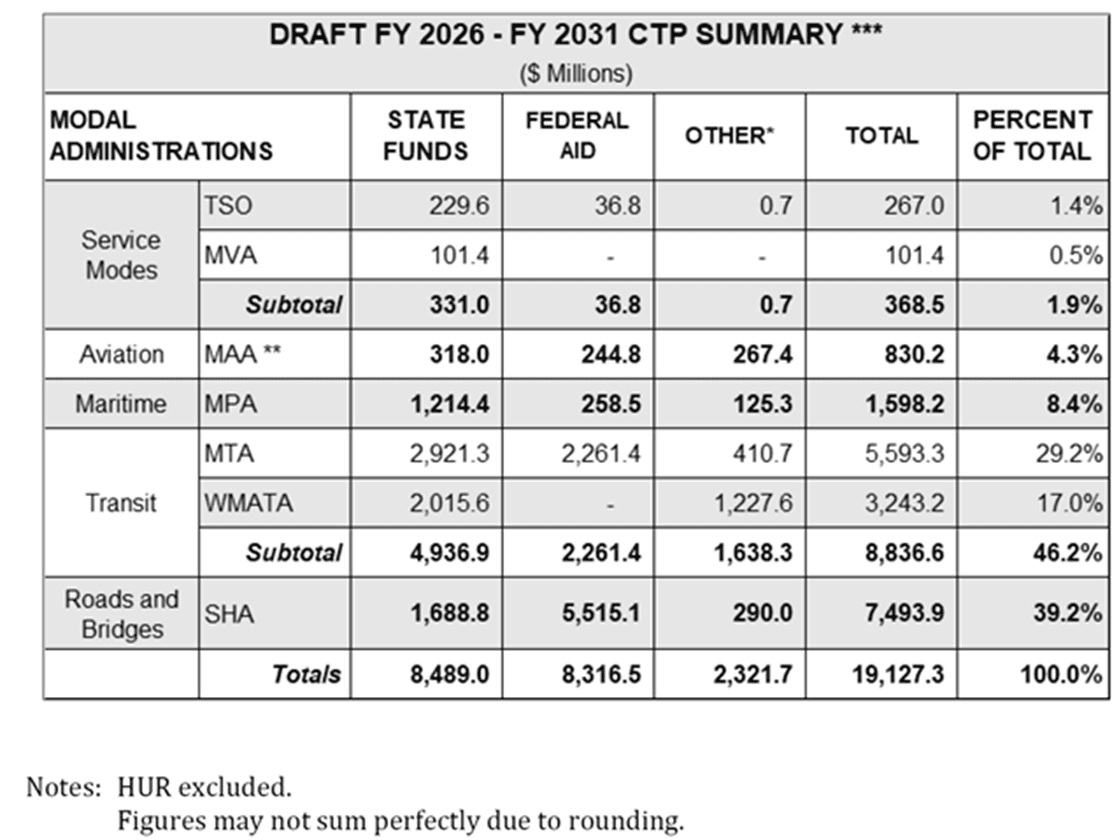
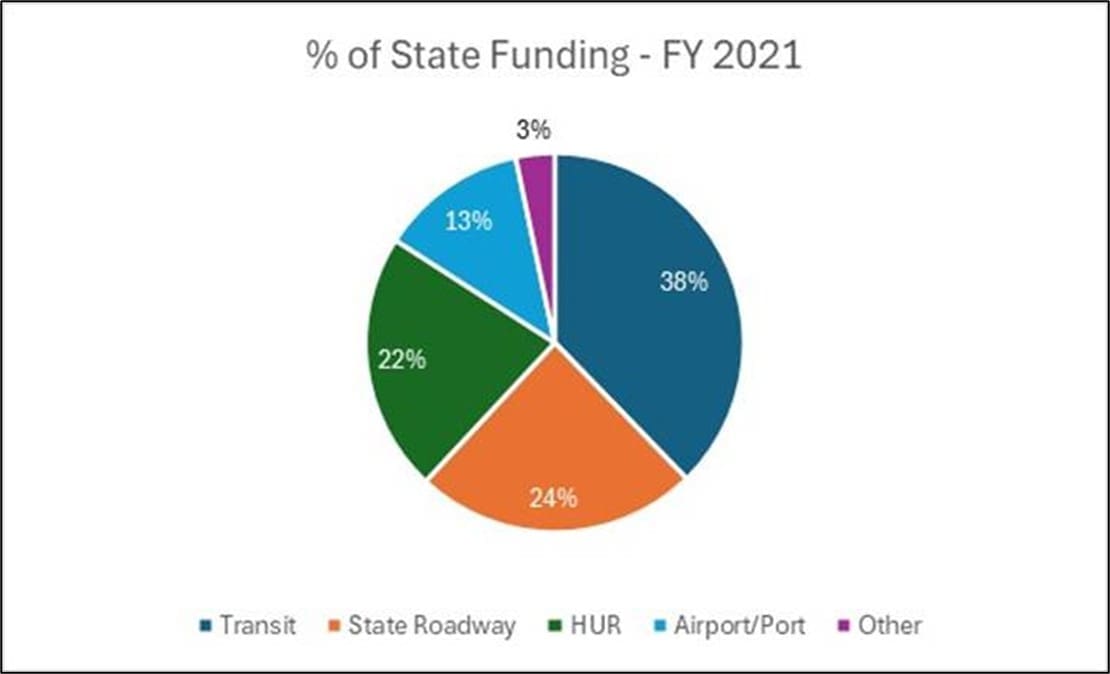
The distribution of state dollars in the Transportation Trust Fund (TTF) continues a trend we’ve seen in recent years – that is, an increased investment in transit at the expense of roadways. Historically, about 24% of TTF dollars supported the state roadway system. Today, that figure has dropped to just 16%. Over the next six years, $1.69B in state dollars will go toward roads, compared to $2.92B for the Maryland Transit Administration (MTA) and more than $2B for WMATA.
To provide you with some visual context of this recent shift in transportation priorities, please see the following graphs:
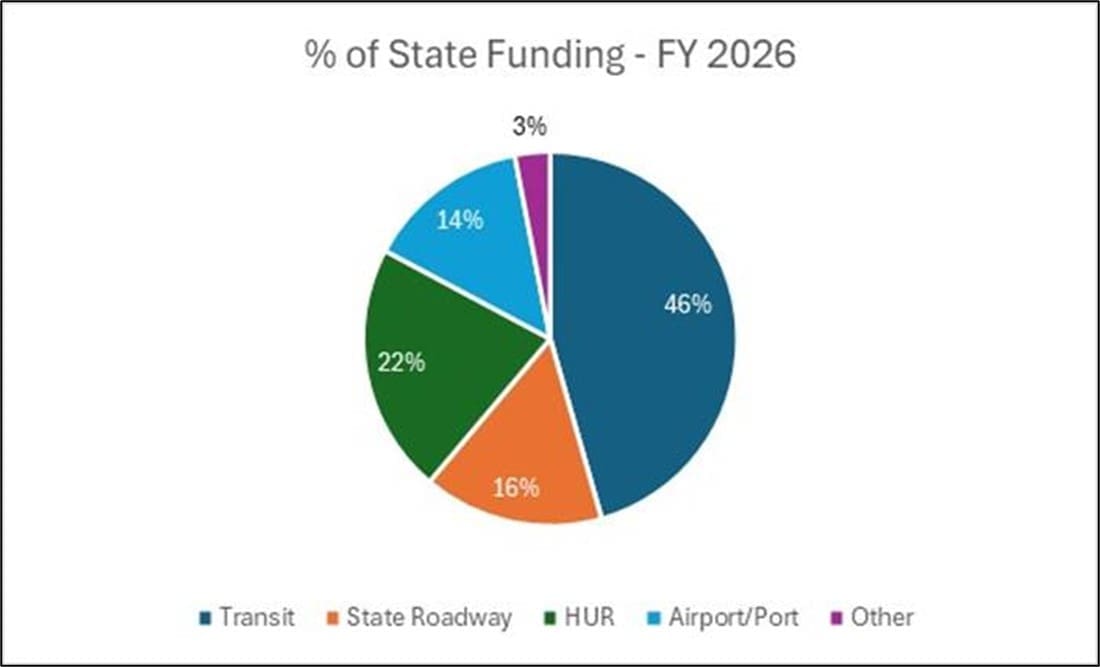
The impact of this shift is most visible and impactful in system preservation. This includes pavement, drainage, lighting, barriers, and other critical roadway features. Despite record overall funding for MDOT, system preservation allocations have fallen. This is especially concerning given MDOT and SHA’s own acknowledgment of a $3.8B funding gap for asset management and system preservation. It’s difficult to reconcile this admission with the decision to reduce preservation funding (see links to the MDOT Attainment Report—top of marked page 12—for reference and Asset Management).
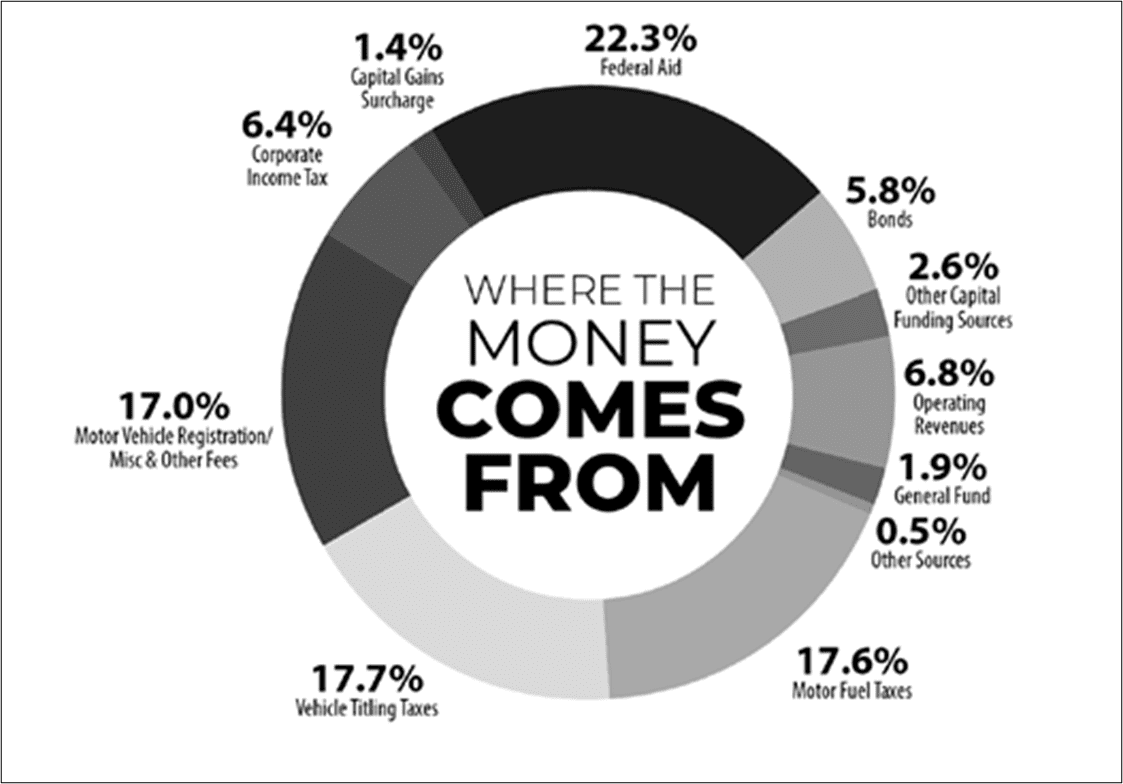
It’s also important to remember the source of funding for the TTF dollars (see the pie chart, left). About 75% of the revenue is generated by roadway users through fuel taxes, registration fees, and other vehicle-related charges. This includes several new fees added during the last legislative session. Federal aid, too, is tied directly to the fuel tax we pay at the pump. Yet roadway users receive a disproportionately smaller share of state investments to maintain existing assets and address capacity needs.
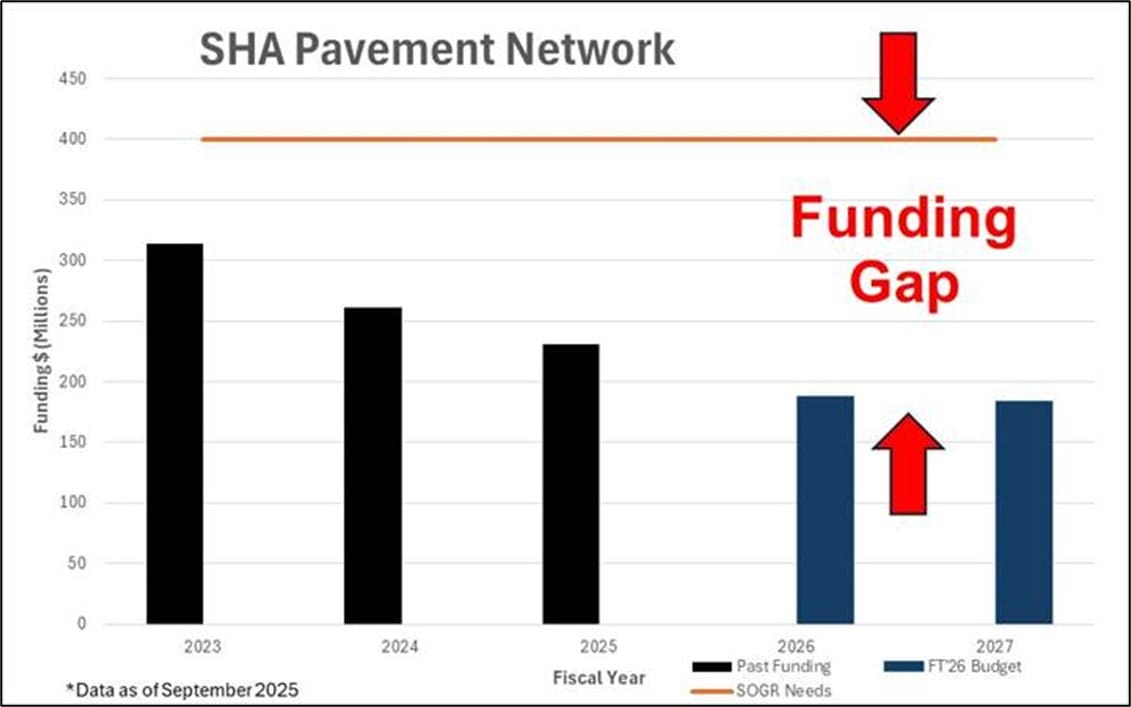
The SHA pavement resurfacing and rehabilitation program (Fund 77) illustrates the imbalance. While the most recent CTP update added approximately $200M to the six-year program, funding levels remain at historic lows given inflation. That is a step in a positive direction, but still shows how deep the cuts were previously, when MDOT can add $200M and still be at historic lows.
Even with this increase, annual paving budgets for FY 2026 and FY 2027 hover just above $180M. This is far below the $400M per year that SHA-supported data shows is needed to maintain roads in a state of good repair.
The following graph with CTP data shows my point:
The consequences of these decisions are becoming clearly visible. Nearly 50% of Maryland roadways are in poor or mediocre condition (HPMS data). We are currently ranked 37th in the nation in roadway investment (U.S. Chamber of Commerce Redbook). In the attainment report mentioned above, SHA estimates the share of poor roads will double in the coming years if current funding levels persist (page 13 of MDOT Attainment Report).
Maryland has a historic transportation budget, but one that continues to undervalue roadway preservation. Applauding the CTP as a finish-line selfie achievement ignores reality. We are only at mile marker 5 of a marathon when it comes to maintaining our roads in Maryland.
We must recommit to prioritizing system preservation and making strategic, balanced investments that serve all Marylanders. If we fail to address deteriorating pavement conditions now, the problems and costs will only grow worse.